Define the brief
Set the purpose, dimensions, order quantity and target date. Share references for the look and function.
Plan custom tote bags for business, retail and events. Compare dimensions, handles, pockets and logo placement, then prepare a clear bulk order brief.
Record finished width, height and gusset separately. Confirm whether the tote should carry by hand or over the shoulder and check the handle drop on a sample.
| Format | Typical brief | Sample focus |
|---|---|---|
| Flat tote | Printed merchandise and flat-packed gifts | Define usable panel area and hand or shoulder carry. |
| Base-gusset tote | Boxed products and everyday contents | Check the filled base and handle attachments. |
| Zipped or crossbody tote | Retail accessories and daily carry | Review opening access, strap hardware and pocket placement. |
A canvas tote reference with short handles and a longer carrying strap. Discuss the panel size, strap length and decoration together for retail merchandise or everyday carry.
Reference size: 45 × 12.5 × 36 cm. View the style for the catalog MOQ and details to reconfirm.
View style & specifications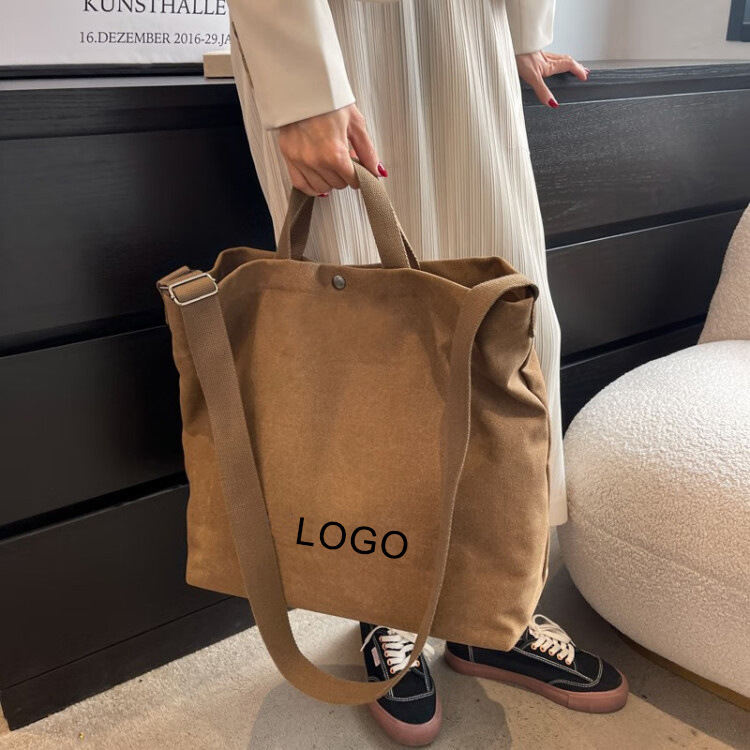
Totes carry shopping, work essentials, travel accessories, gifts and event materials. For custom tote bags for business, define the intended contents before choosing the size or artwork. The same design can suit casual and professional settings when its carrying comfort, organization and appearance fit both uses.
| Decision | Include in the brief | Check on the assembled sample |
|---|---|---|
| Contents & use | List the work kit, retail products, groceries or event contents, including boxes and protective cases. | Pack the complete set; check access and how the base supports it. |
| Size & opening | Specify finished width, height and gusset; also identify the largest item and required usable opening. | Measure usable space with lining, pockets and closure fitted. Outer dimensions alone do not establish fit. |
| Handles & carrying | State hand or shoulder carry, handle drop, width and intended filled weight. Handle drop differs from total handle length. | Try the loaded sample with the intended clothing; inspect attachment points and agree repeat-use checks. |
| Pockets & closure | Mark items needing separate access and choose an open top, zipper or other closure for review. | Check pocket fit, closure clearance and retrieval of small items when the main compartment is full. |
| Fabric & branding | For cotton or canvas, specify composition, weight, finish and color. Mark the logo size and location on the panel. | Review the decorated sample for appearance, seam clearance and the agreed care method. |
For custom printed tote bags, show the artwork at its finished size, with placement measured from a named seam or panel edge. Check the appearance with the bag filled, including folds, pockets and handle attachments.
Give each custom tote bag manufacturer the same specification revision. Separate quantities by design, fabric color and logo version, then confirm sample changes, packing and arrival requirements in the quotation.
Explore the canvas material collection or use the material guide to define the fabric for custom cotton tote bags.
The right quotation begins with a shared understanding of the product. These details help define the sample and production brief.
| Dimensions & material | Specify finished dimensions, outer fabric, lining and reinforcement; approve these on the sample. |
|---|---|
| MOQ by reference style | CR1594: 500 pieces. Catalog starting quantities apply to the stated reference styles; confirm each color, logo and material combination. |
| Sampling | Confirm sample cost, revision allowance and completion date after artwork and materials are agreed. Courier transit is separate. |
| Bulk production | Confirm the production start and dispatch date in the quotation after the specification, sample approval and payment requirements are agreed. Freight and customs are separate. |
| Packing | Confirm individual protection, folded dimensions, units per carton, carton size and weight, labels and carton marks. Request an agreed packing list. |
| Quotation & payment | Request itemized unit price, sample and tooling charges, payment milestones, quote validity and the named delivery term and place. |
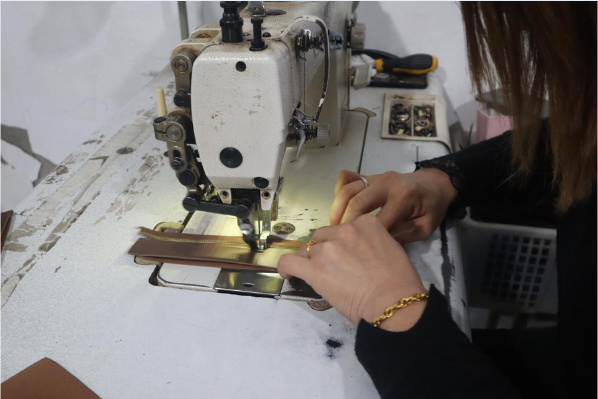
CarryFoundry is the custom bag brand of Dongguan Changrong Handbag Co., Ltd., based in Dongguan, China. We coordinate OEM/ODM development, sampling and production around your brief.
Set the purpose, dimensions, order quantity and target date. Share references for the look and function.
Choose materials, structure, logo placement and packaging. Turn the idea into a specific development brief.
Check the material, construction and decoration on a physical sample. Confirm revisions before production.
Agree the quality checks, packing requirements and shipping plan against the approved specification.
The details that help turn an idea into a clear production brief.
Provide finished width, height and gusset, plus handle drop. Include a photo of the contents and state whether the tote must fit over the shoulder.
Start with the desired feel, print appearance and carrying load. Compare physical swatches and finished samples; fabric weight alone does not determine the strength of handle attachments or seams.
Flat packing depends on the base, structure, hardware and packing presentation. Confirm the folded dimensions and carton plan after the sample is approved.
Keep the same usable dimensions, fabric, lining, handles, artwork and packing in every quote. Separate setup and freight from unit price, and compare quantities per color or design. Review a simpler construction only if it still carries the intended contents. A current written quotation, rather than a generic “affordable” label, establishes the cost for your order.
For a mini tote, measure the gift or accessory set and the usable opening; specify handle clearance as well as body size. For a zipper tote, check zipper length, end clearance and opening access with the bag full. Confirm the proposed size and closure on a project sample. Neither “mini” nor “zipper” identifies a universal catalog size or available stock item.
Pack the largest books or daily-use items together and record the total load. Check base support, handle attachments, shoulder clearance and access to smaller items. Compare color, texture, structure and logo placement on the loaded sample for the intended setting. These selection checks help define a useful design; they do not establish a ranking of the most stylish or best retail products.
Identify the exact fiber, construction, weight, finish and reinforcement for each proposal. Compare the same contents, handle design, logo and use requirements before approving a promotional or bulk tote. A non-woven proposal needs its own material and sample confirmation; the label does not imply cotton or an environmental advantage. Check evidence before using environmental claims.
List the items that travel together and measure them with cases or packaging fitted. Choose usable space and an opening that allow easy access, then check handle drop, carrying comfort, pockets and closure with that load. For a work-to-travel brief, include both sets of contents and the space available in your larger luggage. Select the color and finish for your brand after the construction fits the task. Use the tote specification checklist.
Compare flat shoppers, gusseted totes, structured work totes and zip-top designs by usable space, carrying method and organization. For a women’s collection, choose handle fit, size and appearance around the intended users and contents; a gender label does not define the construction. The formats above are development starting points. Confirm a particular design and its specification before ordering.
Provide both the required open dimensions and the packed size, and say whether it should fold into a pocket or a separate pouch. Check zipper access, fold bulk and the decorated panel through the agreed folding and use checks. Review foldable bag requirements. A zipper and a packable format need to be reviewed together on a project sample before the design is confirmed.
Show both carrying positions and how the straps should adjust or stow. Review strap anchors, attachment hardware, the opening and loose strap ends with the intended load in each mode. Compare the backpack requirements alongside the tote brief. Conversion is a construction requirement to assess with a sample; an ordinary tote or backpack reference does not establish that capability.
Begin with the holiday contents, expected filled weight and carrying conditions. Review base and handle reinforcement, seams, closure operation and the proposed care method on the assembled sample. Choose color and decoration against the actual fabric and loaded shape. Agree the repeat-use checks and acceptance criteria before approval; appearance or fabric weight alone cannot establish finished-bag durability.
Send a bulk project inquiry with the design, color references, quantities and destination. CarryFoundry reviews the specification and quotation before an order is confirmed. Evaluate fabric swatches, the decorated sample and written acceptance criteria for your own quality requirements. This page is a custom project inquiry route; it does not show live retail stock or an instant checkout.
Current catalog reference quantities are CR1594: 500 pieces. These are model-specific starting points, not a minimum for every design. Confirm quantities per color and branding option in your quotation.
Treat sample making, revisions, bulk production and shipping as separate stages. A catalog sample estimate is not an arrival-date promise. Ask for an agreed sample completion date, approval deadline and production dispatch date before committing to a launch.
Approve a dated sample and specification covering dimensions, fabric, lining, hardware, artwork and packaging. Agree inspection methods and acceptance criteria, including any destination-market tests, before production.
Use the same specification and quantities for each quote. Separate unit price from sampling, tooling, packaging and freight. Confirm the delivery term, payment milestones, quote validity and how approved changes affect price and schedule.
Tell us the style, quantity and finishing details you have in mind. Bring a sketch, a reference sample, or simply a starting point.