Define the brief
Set the purpose, dimensions, order quantity and target date. Share references for the look and function.
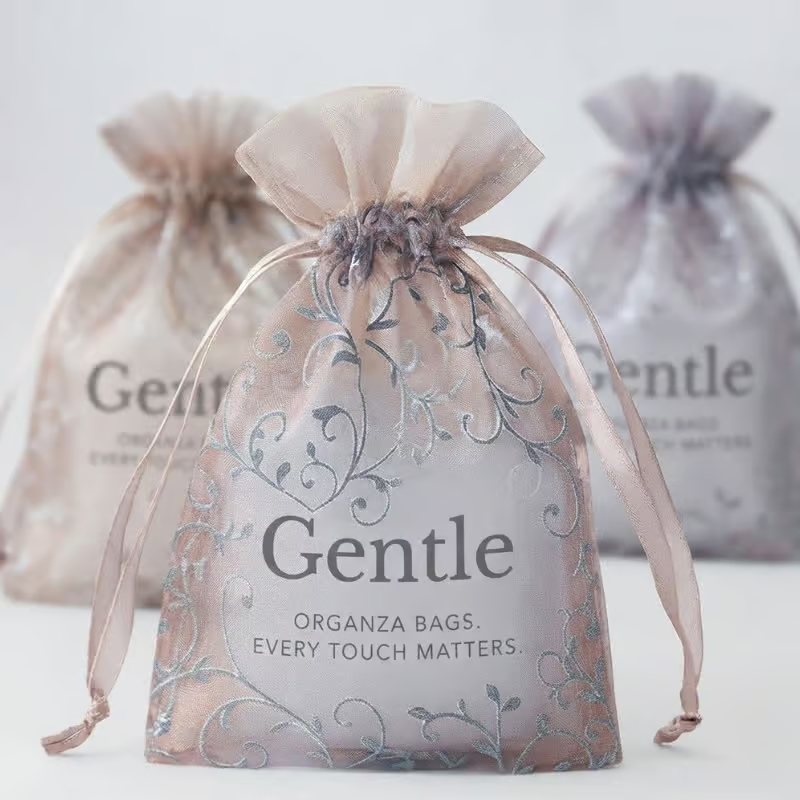
Specify custom jewelry pouches for rings, necklaces and gift sets. Compare lining, closure, logo placement and sample checks for branded packaging.
Identify each jewelry item and finish. Check lining contact, separate chains from other pieces and review closure security on a sample.
Custom jewelry bags need to fit the actual piece and its packaging. Identify the jewelry finish, sharp settings, chain length and any presentation card before reviewing the fabric. Discuss velvet-look or suede-look proposals using an identified swatch, lining and sample; appearance alone does not establish composition or protection.
| Decision | Specify and check |
|---|---|
| Ring or earrings | Include the holder or card in the fit check. Keep posts and settings from catching the lining; review the opening and closure. |
| Necklace or bracelet | Define chain separation and card retention. Check access without dragging the piece across cord ends or exposed seams. |
| Several pieces or travel | Specify separate pouches, dividers or an internal wrap for review. A single soft pouch does not keep loose pieces apart. |
| Fabric and lining | Compare composition, pile or surface finish, lint, color transfer and snagging against the actual jewelry or an approved representative sample. |
| Branding and gift set | Agree logo size, location, color, closure, label and card placement. Review the filled and closed sample before approving a batch. |
The right quotation begins with a shared understanding of the product. These details help define the sample and production brief.
| Dimensions & material | Specify finished dimensions, outer fabric, lining and reinforcement; approve these on the sample. |
|---|---|
| MOQ by reference style | Request a style-specific minimum. Specify quantity per design and color; fabric, hardware and decoration can affect the minimum. |
| Sampling | Confirm sample cost, revision allowance and completion date after artwork and materials are agreed. Courier transit is separate. |
| Bulk production | Confirm the production start and dispatch date in the quotation after the specification, sample approval and payment requirements are agreed. Freight and customs are separate. |
| Packing | Confirm individual protection, folded dimensions, units per carton, carton size and weight, labels and carton marks. Request an agreed packing list. |
| Quotation & payment | Request itemized unit price, sample and tooling charges, payment milestones, quote validity and the named delivery term and place. |
Set the purpose, dimensions, order quantity and target date. Share references for the look and function.
Choose materials, structure, logo placement and packaging. Turn the idea into a specific development brief.
Check the material, construction and decoration on a physical sample. Confirm revisions before production.
Agree the quality checks, packing requirements and shipping plan against the approved specification.
The details that help turn an idea into a clear production brief.
Identify each jewelry item and finish. Check lining contact, separate chains from other pieces and review closure security on a sample.
Choose the jewelry set, usable size, material, lining and closure first. Supply the logo or event artwork at its finished size, quantities per design and any names or dates. Review print, embroidery or label feasibility on the actual surface, including the reverse side. Approve a decorated, filled sample and the packing arrangement together.
Compare identified cotton or canvas, velvet-pile and suede-look proposals against the same jewelry and presentation brief. Cotton or canvas changes the texture and print appearance; pile surfaces change the feel and may need different decoration. For every option, inspect the contact surface, lining, lint, color transfer and seams. There is no verified universal best material for every jewelry finish.
Pair a fitted pouch with a presentation card, use separate small pouches for a coordinated set, or place a branded pouch inside a gift box. For an event, align the pouch artwork with the card and outer label. Check that inserts, bows and cords do not snag the jewelry or prevent closure; approve the complete assembled gift.
A soft pile surface can separate an item from direct contact with the surrounding packaging and create a soft presentation. The benefit depends on the actual surface, lining and fit. Inspect shedding, snagging and dye transfer before use; velvet alone does not establish anti-tarnish, moisture-barrier or impact protection. Store separate pieces apart when contact could cause damage.
Measure the trinket together with its card or protective wrap. Compare a simple drawstring pouch for quick access, a zip pouch for contained access, or a divided format when pieces must stay apart. Check the usable opening, seam contact and retrieval on the filled sample. These are construction choices to review, not a list of confirmed stocked styles.
Identify whether the material is natural suede, synthetic suede or a coated fabric, then follow the material supplier’s care instructions. Remove the jewelry first. Do not assume a pouch is washable or apply solvents, heat or a brush without confirming the method for that surface. Trial the approved method on a spare swatch or inconspicuous area and let the pouch dry fully before reuse.
Send CarryFoundry the contents, dimensions, material reference, artwork and quantity for project review. Confirm the material, decoration feasibility, sample and written price before ordering. This inquiry route does not establish retail availability, handmade production, an independently ranked quality level or the lowest market price.
The minimum is confirmed for the selected design, material, color and decoration. Send the quantity per variant so we can check the brief against material and production requirements.
Treat sample making, revisions, bulk production and shipping as separate stages. A catalog sample estimate is not an arrival-date promise. Ask for an agreed sample completion date, approval deadline and production dispatch date before committing to a launch.
Approve a dated sample and specification covering dimensions, fabric, lining, hardware, artwork and packaging. Agree inspection methods and acceptance criteria, including any destination-market tests, before production.
Use the same specification and quantities for each quote. Separate unit price from sampling, tooling, packaging and freight. Confirm the delivery term, payment milestones, quote validity and how approved changes affect price and schedule.
Tell us the style, quantity and finishing details you have in mind. Bring a sketch, a reference sample, or simply a starting point.