
By CarryFoundry · Updated
What should a custom bag brief include?
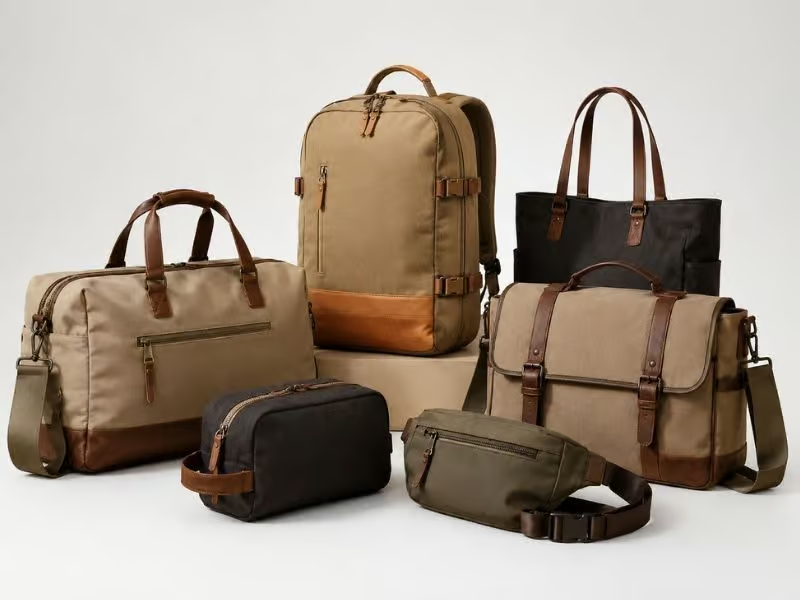
Start with the bag style, finished dimensions, intended contents, outer material, lining, logo artwork, quantity per color, packaging and delivery destination. Add your required arrival date and a reference photo. Mark which details are fixed and which can change. This lets the supplier discuss a feasible construction and quotation without treating a mood-board image as an approved specification.
Copy these fields into your next quotation request.
Use one dated brief for every supplier, then record any proposed alternatives against it. The downloadable text template below includes space to complete each field and a repeatable row for every order variant. Leave an undecided detail marked “to confirm” rather than allowing a reference photo to decide it.
| Field | Copy and complete |
|---|---|
| Project and use | Project / revision: ____; intended use: ____; contents and their packed size: ____ |
| Bag specification | Reference model: ____; finished width × depth × height and units: ____; material / lining / color: ____; handles / closure / pockets: ____ |
| Variant quantities | Design: ____; fabric color: ____; artwork revision: ____; pieces for this combination: ____; order total: ____ |
| Artwork | File / version: ____; finished logo size: ____; panel / position: ____; color reference: ____; method to review: ____ |
| Packing | Individual packing: ____; labels / barcode: ____; carton instructions: ____; mixed variants permitted: ____ |
| Arrival and approval | Delivery country / postcode: ____; required arrival date: ____; sample type: ____; sample approver: ____ |
| Quotation scope | Currency: ____; delivery term / named place: ____; fixed requirements: ____; alternatives to quote separately: ____ |
Choose a reference, then describe the changes.
A catalog model is a useful starting point, but changing its size, fabric, lining or hardware can change the order minimum and development work. Reference CR1594 when discussing a canvas crossbody tote, CR602 for a zipper toiletry pouch or CR1439 for a quilted nylon duffel. State the differences from that reference explicitly. Do not assume the pictured finish is in stock or that a custom version inherits every catalog condition.
Turn a reference image into a specification.
Hypothetical example: a brand wants a tote for a boxed garment, with a front logo and a longer carrying strap. The photo communicates the intended appearance; the contents, dimensions, fabric and load requirement still need to be supplied or agreed. This is a planning example, not a customer project or a tested product specification.
| Visible idea | Requirement to write | Confirm on the sample |
|---|---|---|
| A roomy tote shape | Measure the actual packed contents; agree the finished dimensions and opening. | Pack the contents and check access, closure clearance and filled shape. |
| A canvas-like surface | Request the exact fiber composition, fabric weight, finish and lining. | Compare the identified swatch and assembled bag; appearance does not establish composition. |
| A long carrying strap | Specify the required carry position, strap dimensions and whether adjustment is needed. | Review reach, comfort and attachment against the agreed carrying use. |
| A front logo | Supply the artwork revision, finished size and distances from defined edges. | Check the physical decoration on the filled bag, clear of folds and handles. |
Separate the total quantity from each variant.
Write the total order and the quantity for each design, fabric color and logo version. A total of several colors is different from a single-color production run. Ask whether minimums apply to the complete order, each color, a special fabric or a custom hardware part. The reference quantities below come from the Changrong catalog; your selected specification still needs a written quotation.
What does the sample quote cover?
Ask whether you are reviewing an existing reference sample, a decorated sample or a newly constructed prototype. Confirm material availability, artwork preparation, sample charges, courier cost, included revisions and any conditions for crediting the sample fee against a bulk order. Record a sample completion date separately from courier arrival. Do not approve a new revision using photographs of an earlier version.
Plan the timeline from the required arrival date.
Work backward through freight, customs, packing, inspection, bulk production, material preparation and sample approval. Ask the supplier to state what must be approved or paid before each stage starts. A production estimate is not a delivery estimate. A change to fabric, hardware or artwork after sample approval may require a new price and schedule. Keep the approved revision, approval date and delivery plan together.
| Stage | Record before the next stage |
|---|---|
| Sample development | Sample type, material availability, completion target and courier plan. |
| Review and approval | Received sample revision, corrections, named approver and written sign-off date. |
| Bulk production and inspection | Agreed start conditions, production estimate, inspection criteria and packing approval. |
| Dispatch and delivery | Dispatch target, delivery term, freight responsibility, destination and required arrival date. |
Compare quotes on the same basis.
Check that competing quotations use the same fabric specification, lining, dimensions, logo method, packaging and quantity split. Separate sample and tooling charges from unit price and freight. Request the delivery term and named place, quote currency, validity, payment milestones and inspection arrangement. A lower unit price is not a complete comparison if packing or transportation is excluded.
Make sample approval measurable.
Use the intended contents to check usable space, closure access and carrying comfort. Agree dimension tolerances, artwork placement and the test method for any load or performance requirement. Record which defects are unacceptable and how inspection results will be handled. A reference photograph cannot establish test performance or market compliance; ask for evidence that matches the actual material and model.
| Reference style | Reference size | Catalog MOQ |
|---|---|---|
| CR602 zipper toiletry pouch | 24 × 10 × 14 cm | 300 pieces |
| CR1594 canvas crossbody tote | 45 × 12.5 × 36 cm | 500 pieces |
| CR1439 quilted nylon duffel | 48 × 30 × 20 cm | 100 pieces |
| CR1741-1 casual backpack | 43 × 28 × 11.5 cm | 100 pieces |
Download the sourcing brief checklist
Continue your project
- Compare tote constructions
- Plan a drawstring bag order
- Plan a cosmetic bag
- Develop a backpack
- Review travel bags
