Define the brief
Set the purpose, dimensions, order quantity and target date. Share references for the look and function.
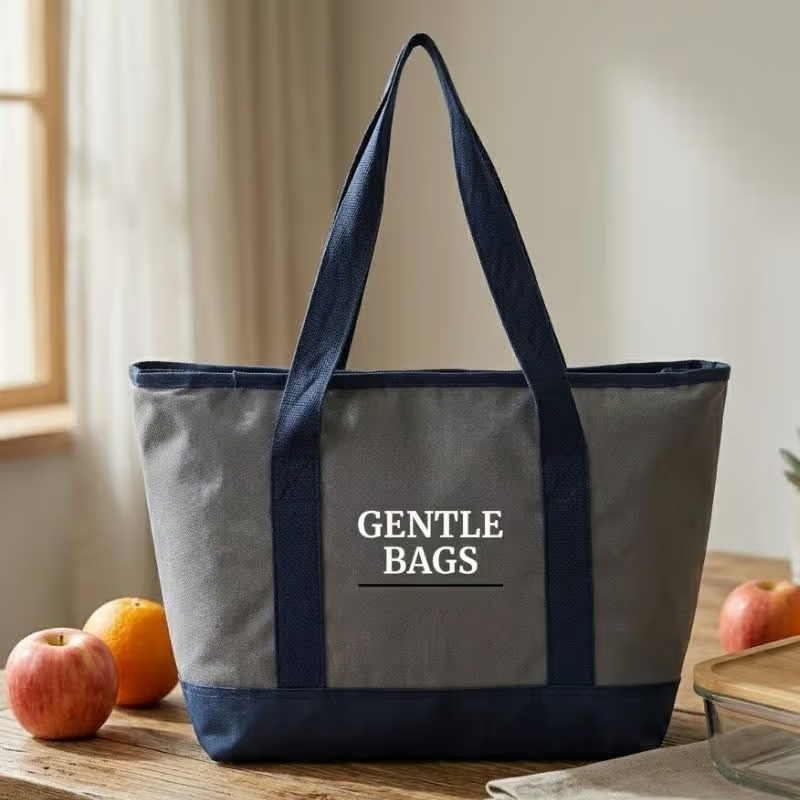
Specify custom cooler bags with logo for bulk projects. Define usable size, liner, insulation, closure and whole-bag testing before approving a quotation.
Define contents, starting temperature and intended carrying time. Agree a complete-bag test before making a temperature-retention claim.
A cooler bag brief needs more than an outer fabric and a printed logo. Describe the contents, cold packs, starting conditions, carrying method and required use period. CarryFoundry reviews custom insulated cooler bag requirements by project; agree the actual construction and evidence before using a performance claim.
| Decision | Specify and check |
|---|---|
| Contents and usable size | List the actual containers, bottles and cold packs. Measure their packed arrangement, including room to close the bag without compressing the contents. |
| Outer, insulation and liner | Identify each layer and its thickness or weight where relevant. Record insulation coverage, joins, liner construction and the proposed cleaning method. |
| Closure and carrying | Review opening access, zipper or flap coverage, handle attachments and strap comfort with the complete intended load. |
| Temperature evaluation | Agree ambient conditions, starting temperatures, content and cold-pack quantities, sensor positions, opening schedule and acceptance criterion before testing the sample. |
| Logo and bulk order | State the logo area and process for review, pieces per color, packing format and destination. Recheck the assembled decorated sample; avoid assuming the artwork leaves every layer unaffected. |
The right quotation begins with a shared understanding of the product. These details help define the sample and production brief.
| Dimensions & material | Specify finished dimensions, outer fabric, lining and reinforcement; approve these on the sample. |
|---|---|
| MOQ by reference style | Request a style-specific minimum. Specify quantity per design and color; fabric, hardware and decoration can affect the minimum. |
| Sampling | Confirm sample cost, revision allowance and completion date after artwork and materials are agreed. Courier transit is separate. |
| Bulk production | Confirm the production start and dispatch date in the quotation after the specification, sample approval and payment requirements are agreed. Freight and customs are separate. |
| Packing | Confirm individual protection, folded dimensions, units per carton, carton size and weight, labels and carton marks. Request an agreed packing list. |
| Quotation & payment | Request itemized unit price, sample and tooling charges, payment milestones, quote validity and the named delivery term and place. |
Set the purpose, dimensions, order quantity and target date. Share references for the look and function.
Choose materials, structure, logo placement and packaging. Turn the idea into a specific development brief.
Check the material, construction and decoration on a physical sample. Confirm revisions before production.
Agree the quality checks, packing requirements and shipping plan against the approved specification.
The details that help turn an idea into a clear production brief.
Define contents, starting temperature and intended carrying time. Agree a complete-bag test before making a temperature-retention claim.
Insulation slows heat transfer between the contents and their surroundings. Cold contents and cold packs provide the initial cooling; a passive cooler bag does not generate refrigeration. The insulation, joins, closure, ambient temperature, load and frequency of opening affect the result. Verify the intended use on the complete bag rather than assigning a duration from the material name.
Identify the outer fabric, insulating layer and inner liner separately. Ask for the proposed insulation type and thickness, the liner specification and the construction at seams and closures. Compare alternatives under the same whole-bag test conditions. A foil-look lining or thicker foam alone does not establish the best thermal performance, leak resistance or suitability for direct food contact.
Pack the intended meal containers, drinks and cold packs together first. For a daily lunch, include the utensils and any container that must remain upright; for a picnic, use the full group quantity. Specify usable internal dimensions and opening clearance, then test the arrangement in the sample. Outer dimensions or a nominal liter capacity do not guarantee the required fit.
Inspect the loaded handle and strap attachments, base, seam finishing and closure operation. Check liner access for cleaning, insulation continuity and space for the actual containers. Agree repeat-use, cleaning and temperature checks appropriate to the project. Water resistance of an outer fabric, leak resistance of the liner and thermal performance are separate requirements.
Compare rigid protection and storage shape against carrying weight, foldability and available space. A soft bag may suit flexible packing; a rigid cooler may suit a brief needing a supported shell. Use the same contents, cold packs and environmental conditions when comparing temperature results. Neither format guarantees a particular retention time from its shape alone.
Specify the required usable capacity, total packed load and target empty weight. Review insulation, strap attachments, back contact, access and cleaning on the same sample. Reducing weight can change construction, so verify carrying and temperature requirements together. A regular backpack or cooler tote reference does not prove a combined cooler-backpack design is available.
The minimum is confirmed for the selected design, material, color and decoration. Send the quantity per variant so we can check the brief against material and production requirements.
Treat sample making, revisions, bulk production and shipping as separate stages. A catalog sample estimate is not an arrival-date promise. Ask for an agreed sample completion date, approval deadline and production dispatch date before committing to a launch.
Approve a dated sample and specification covering dimensions, fabric, lining, hardware, artwork and packaging. Agree inspection methods and acceptance criteria, including any destination-market tests, before production.
Use the same specification and quantities for each quote. Separate unit price from sampling, tooling, packaging and freight. Confirm the delivery term, payment milestones, quote validity and how approved changes affect price and schedule.
Tell us the style, quantity and finishing details you have in mind. Bring a sketch, a reference sample, or simply a starting point.